Offering creative courses in garden sculpture and natural crafts using a range of natural and decorative materials.
Author: carolinewright201
After being a course leader and lecturer in Horticulture at Nottingham Trent University for nearly 20 years I am now working on a new venture in Limousin, France. In our plant nursery and garden school we aim to carry on sharing our passion for horticulture and natural crafts.
Specialist subjects include plant science, propagation, plant identification, specialist traditional and modern pruning and maintenance techniques. We also teach greenwood crafts, weaving, stained glass art and other crafts using natural materials.
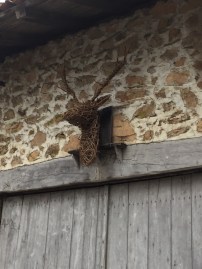
Come along and learn the art of making animal sculptures out of willow. Make a majestic stag’s head to take home.
You will learn the basics of using willow as a medium for sculpture and create an impressive stag head sculpture over the course of the day.
Wednesday 10th October 10.00-4.00, light lunch and all materials included: 60€
WE ARE NOW FULLY BOOKED ON THIS DATE PLEASE GET IN TOUCH IF YOU WISH TO REQUEST AN EXTRA DATE
To book onto the course you can use the ‘buy now’ button below. This is a secure PayPal transaction but you do not need a PayPal account to use it. We will send you confirmation and more details when we have received your booking.
If you prefer to pay by cheque then you can reserve a place by using the enquiry form below, if there are places available we will send you a booking form and further information.
Did you know that most members of the daisy family (or Compositae) have ‘composite’ flower heads? Each ‘flower’ actually consists of hundreds of tiny flowers squashed together – the inner circle containing the true flowers that contain the reproductive organs (known as the ‘disc florets’) and the outer ring of petal-like structures are actually individual flowers posing as petals (known as ‘ray florets’), these are usually sterile but occasionally you can see the tiny stamen or stigma emerging.
A sunflower is the classic example – each individual disc floret has a single ovary and after pollination, each one develops a hard seed coat with a single seed inside, which you will recognise as sunflower seeds.
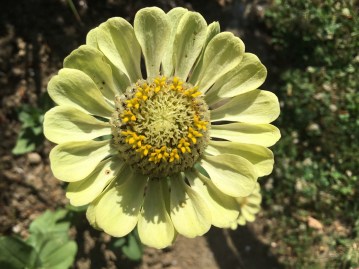
This Zinnia flower clearly demonstrates a ring of tiny flowers opening, they usually open concentrically, one ring at a time to help avoid self fertilisation and spread the flowering period. Check out the Rudbeckia in the feature image too, see if you can spot the true flowers!
Take a close look at all of your daisies! sometimes you need a magnifying glass – to see this interesting and clever trick of nature.
If you want to find out more about the fascinating world of plants, come along on our botany short course this autumn! Basic botany course
The daisy family has recently been reclassified and is now known as the Asteraceae family and consists of over 1500 genera – see how many you have in your garden!
Get floral and make some unique plaster tile as a wall hanging or decoration.
You will have the opportunity to make a pair of tiles, they can be themed or matching or totally different. Wednesday 29th August 2-4pm Cost 25 euros
Your tiles will be dry enough to take away at the end of the session but you may want to paint them, varnish them or give them a colour wash when fully dried after a couple of days.
To book a place on this course use the ‘buy now’ button below. This is a secure PayPal payment but you do not need to have a PayPal account in order to use it. We will send confirmation and more details once we receive your booking. If you prefer to pay by cheque then please use the enquiry form below to check availability and we will send you a booking form and more details by email.
Come along and make an owl out of chicken wire! You will learn the basics of building a sculpture using chicken wire and create a stunning owl sculpture for your garden or home.
The course will run from 10.00-3.00 and will include a light lunch. (Please be aware that everyone works at different speeds and you may finish a little earlier or later than the scheduled time) cost: 40 euros
Chicken wire is a fairly malleable material and easy to mould and this course is suitable for beginners but some dexterity and physical strength is needed to work with this material over a day.
We now have a couple of places available on this date, you can book using the online system via the buy now button below or use the enquiry form below to check availability if you would rather send payment by cheque.
Learn basic willow weaving techniques and create a stunning ‘acorn’ lantern for your garden, summer house or home by adding some fairy lights.
This half day course runs from 1.00-5.00 with a short break for refreshments (included)
You will create your own lantern to take home with you (all materials for the willow lantern are included in the cost) Add your own battery powered or solar lights to create a unique and subtle outdoor light.
This is a good beginners piece for anyone who wants to learn willow weaving or willow sculpture. More advanced courses will be running later in the year.
You will need to wear comfortable ‘work’ clothes and bring a pair of light gardening gloves. Willow is a flexible material but moderate strength and dexterity in your hands and wrists are beneficial. We can help you if necessary.
17th October 1.00-5.00pm 35€ per person THIS COURSE IS NOW FULLY BOOKED, IF YOU WANT TO REQUEST AN EXTRA DATE OR MAKE A GROUP BOOKING PLEASE USE THE CONTACT FORM BELOW TO GET IN TOUCH
To book a place you can use the buy now button below to confirm your place, we will send you confirmation and further information once we receive your booking. This is a secure PayPal payment but you do not need to have a PayPal account in order to use it. If you prefer to send a cheque please use the enquiry form below to check availability and reserve a place. We will send you a booking form and more information about the course.
If you have any questions or comments please use the contact form below:
This basic course in plant propagation will look at the basics of propagating from seed and from semi-ripe and hardwood cuttings. You will learn a little botany that will help you to be more successful in rooting cuttings and understanding the different types of seeds, seed saving tips and overcoming different types of dormance in seeds.
You will have the opportunity to take cuttings from a range of plants to take home.
There will be follow on courses in February and May where you can learn the art of grafting (February) and softwood cuttings in May.
This half day introductory course is running on Wednesday 24th October 1-4pm 20€ per person.
To book a place on the course use the button below, this is a secure PayPall transaction but you do not need a PayPall accout to use it. If you prefer to send a cheque please use the enquiry form below to check availability and request a booking form.
Now is the time to help some of your vegetable crops with pollination.
Quite a lot of veg crops are self fertile because they possess flowers that contain both male and female reproductive structures (stamen and pistil- which consists of the style and the stigma) and are capable of transferring pollen from the stamen to the pistil within the same flower. Most peas and beans are self fertile and the fruits set easily.
Courgette – female flower
Some plants have evolved complicated mechanisms to avoid self pollination and therefore improve genetic diversity. Two common vegetable plants that can be described botanically as ‘monoecious’ display this principle. A monoecious plant will possess separate male and female flowers, this helps to avoid self pollination. Courgettes, cucumbers and squash are all monoecious and it is easy to spot the female flowers as they are the ones attached to the ovary (the young courgette, cucumber or squash), the male flowers are simply attached to a stalk, they are only open for one day and rely on insect pollination but if the weather is very wet or windy this may not happen. You can help out by picking off a male flower, peeing back the petals to reveal the stamen in the centre and rubbing some of the pollen off onto the stigma in the centre of the female flower. This should improve fruit set (the fruit
Courgette – male flower
will wither and drop off if pollination doesn’t take place).
Sweetcorn are also monoecious, but these plants are wind pollinated and this is why it is recommended that you plat them in blocks rather than rows so that pollen is more likely to be blown onto a nearby female ‘flower’. Again, the females are easy to spot as they grow out of the top of the young corn cob, they resemble lots of hairy green blades of grass sticking out – these are the stigma – each one needs to encounter a pollen grain if the little yellow corn kernel is to develop. Poor pollination is common in sweetcorn and the reason for the cobs not developing properly. If wind is too strong, or non existant then pollination can be very poor. When the male flowers open up on your plants and the green stigma are visible go and give each plant a little shake – you should be able to see the pollen falling down onto the female flowers.
Sweetcorn grown in blocks
Sweetcorn – female flowers
Sweetcorn – male flowers
These methods should give you a better crop of each.
If you have plenty of male courgette flowers – why not try stuffed courgette flower fritters – take fresh male flowers in the morning and keep then chilled. Stuff with a mix of rice, herbs and spices, sautéed onions, mushrooms, chunks of feta cheese, pine nuts.. in fact anything that you fancy…. dip into tempura batter and fry. YUM, serve with a salsa or tzatziki dip.
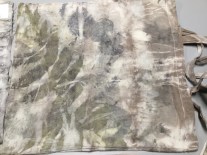
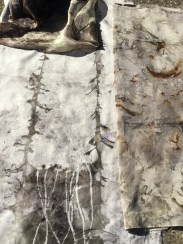
Come along and have a go at eco-printing techniques. You will experiment with leaves, flowers and rust combined with plant based dyes on cotton and paper samplers. You can bring your own T shirt or household lined to work on too. You will go home with some unique prints and an understanding of the materials and processes involved so that you can go away and experiment at home.
Wednesday 1st August 1-4pm 35€
THIS COURSE IS NOW FULLY BOOKED if you are interested in doing this course on a different date please use the enquiry form below to request an extra date
To book a place on this course use the ‘Buy Now’ button below. This is a secure PayPal transaction but you do not need a PayPal account to use it. We will send you confirmation and further details when we receive your booking.
If you prefer to send a cheque then please use the enquiry form below to reserve a place. If we have availability we will send you a booking form and more information. You can use the enquiry if you have any questions about the course too.
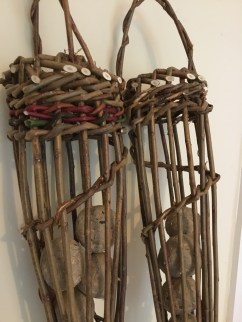
This half day course will teach you some basic weaving techniques through the creation of a hanging fatball bird feeder. These make great gifts and are an attractive garden feature.
A perfect option for beginners wanting to develop new skills. We are running this course on Wednesday 26th September 2018. 10.00pm – 12.30pm. You will need to wear comfortable work clothing. Light refreshments and all materials are included in the cost of 25 euros per person. We will send you confirmation and further information once we have received your payment.
To book a place on the course you can use the ‘Buy Now’ button below. This is a secure PayPal transaction but you do not need a PayPal account to use it. We will send you confirmation and further information once we receive your booking.

If you prefer to send a cheque, please use the enquiry form below to check availability and reserve a place, we will send you a booking form and further details. If you have any questions about the course you can also use the enquiry form below.
Come along and learn the art of making animal sculptures out of willow. Make a majestic stag’s head to take home.
You will learn the basics of using willow as a medium for sculpture and create an impressive stag head sculpture over the course of the day.
Saturday 22nd September 10.00-4.00, light lunch and all materials included: 60€
THIS COURSE IS NOW CLOSED FOR BOOKINGS AS WE HAVE TO SOAK THE WILLOW FOR 5 DAYS PRIOR TO THE COURSE, IF YOU WANT TO MAKE A STAGS HEAD WE ARE HOLDING ANOTHER COURSE ON 10TH OCTOBER
To book onto the course you can use the ‘buy now’ button below. This is a secure PayPal transaction but you do not need a PayPal account to use it. We will send you confirmation and more details when we have received your booking.
If you prefer to pay by cheque then you can reserve a place by using the enquiry form below, if there are places available we will send you a booking form and further information.