
After being a course leader and lecturer in Horticulture at Nottingham Trent University for nearly 20 years I am now working on a new venture in Limousin, France. In our plant nursery and garden school we aim to carry on sharing our passion for horticulture and natural crafts.
Specialist subjects include plant science, propagation, plant identification, specialist traditional and modern pruning and maintenance techniques. We also teach greenwood crafts, weaving, stained glass art and other crafts using natural materials.
Summer pruning of ‘restricted’ fruit forms
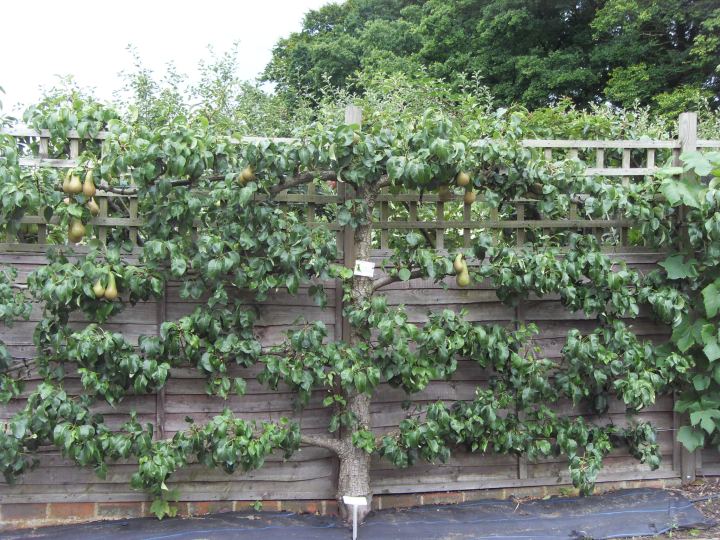
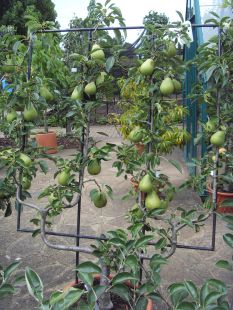 If you are growing cordon, espalier, fan trained or other ‘restricted’ forms of fruit trees on dwarfing rootstocks, now is the time for summer pruning. In France we can start this process a little earlier than in England which is usually late July. The ideal time is when the lateral shoots that have grown all along the main stems are roughly as thick and as long as a pencil.
You need to cut all of these new stems back to a couple of buds, this will keep the shape of the tree restricted and in form, it will also reveal the fruits and main branches which will allow sunshine to ripen the fruits, making them sweeter, tastier and give them a red


bloom. It will also allow sunshine to ripen the wood of the main branches and spurs which helps to strengthen the wood, prepare for dormancy and induce bud formation for next years flowers and fruits.
We will be holding a demonstration at Le Jardin Creatif on Saturday 30th June at 11.00am FREE. Come along on Saturday and find out more.
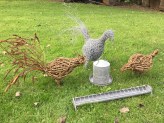 If you enjoy this beginners course we will be offering intermediate courses later this year to make chicken, cockerel or duck sculptures for the garden.


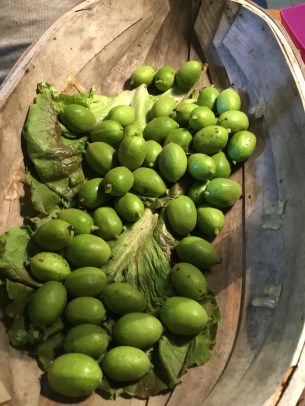 Walnuts are pickled whole in their outer husk before the inner shell starts to harden. They should be picked before they reach full maturity and should be around the size of a quails egg or slightly larger, this is usually around mid-June, to determine the best time for pickling you need to pick one off the tree and cut it in half, if the shell is still soft and they are a reasonable size then they are ready for pickling. You dont need many to fill a jar, maybe around 10 to a dozen per jar. There are plenty on the trees this year so you won’t miss them at harvest time.
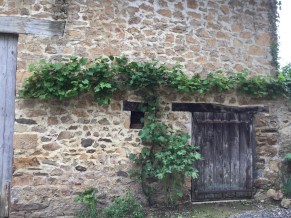
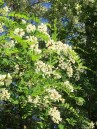 All around us at the moment is the sweet aroma of the Robinia pseudoacacia (false acacia) flowers. Last summer our French neighbour recommended that we try making beignets – fritters – with them. Having tried elderflower fritters we were keen to have a go.
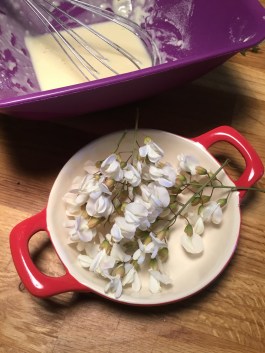 ain flour, beaten egg and a drop of sparkling white wine as there happened to be a bottle open! (You could use beer or sparkling water) you then dip the flowers into the batter by holding onto the main stem, let some of the excess drain off and then fry until golden in hot oil, this only takes a couple of minutes.
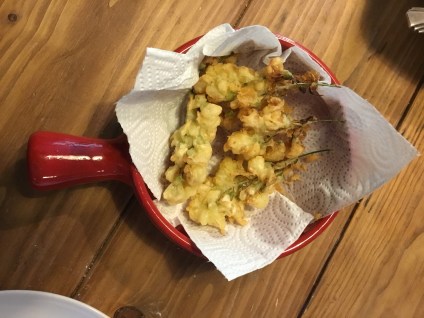 We served this as a savoury dish with tapas, they go nicely with a yogurt and tahini dip or a smokey chilli salsa but you can also drizzle with honey and eat as a desert with crème fresh. Yum!
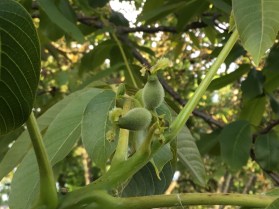 when there is either no wind or too much wind or heavy rain, pollination may be poor.
 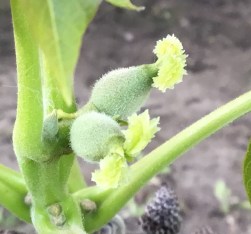 The female ‘flowers’ are not particularly decorative. Because they do not need to attract insects there are no petals, colour or scent, instead they are purely functional consisting of the plump ovary (that will develop into the nut) ad two large and feathery stigma that are sticky and have evolved to capture as much pollen as possible.


