IMG_0227Have you ever wondered why the leaves on deciduous trees change colour in the autumn?

Most of us will have a vague memory from science class at school that chlorophyll is the name for the green pigment found in leaves that acts like thousands of miniature solar panels capturing the energy from sunlight and converting it into energy that can be stored in the form of carbohydrates or sugar. This energy is used by plants for growth and is also the main source of carbohydrates that passes up the food chain feeding the world and also providing fuel and building materials.
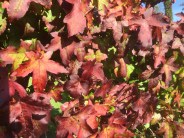
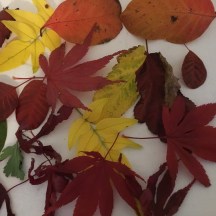
IMG_1200Chlorophyll reacts to certain wavelengths of light but these are limited, to make the most of the light spectrum plants also use other pigments similar to carotene that can react with a wider range of the spectrum. These colours are hidden by the intensity of the green chlorophyll in plants with green leaves. However, once the days start to shorten and the temperatures drop this triggers a process called abscission, in simple terms ‘leaf fall’. Plants need to be thrifty though, the main elements that make up chlorophyll are iron and magnesium but these can be in short supply within the soil when the trees come into leaf in the spring so the trees carefully extract these elements, drawing them back into the tree to store away ready for the first flush of growth in the spring.  This is when the other pigments are revealed giving us the fantastic display of autumn colours.

Next spring at Le Jardin Creatif we will look at harnessing these colours to use as natural fabric dyes so follow our pots to find out more and sign up for one of our workshops. If you want to find out more about how plants work we will also be offering short courses in botany. Follow our blog at https://lejardincreatif.net or follow us on Facebook to keep up to date.
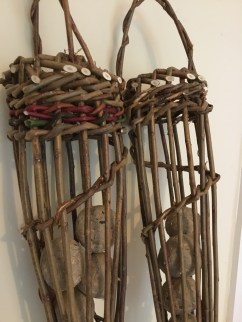
 

IMG_0160This half day course will teach you some basic weaving techniques through the creation of a hanging fatball bird feeder. These make great gifts and are an attractive garden feature.

A perfect option for beginners wanting to develop new skills. We are running this course on Thursday 8th February or Saturday 10th February 2018. 1.00pm – 4.00pm. You will need to wear warm work clothing. Light refreshments and all materials are included in the cost of 25 euros per person. We will send you confirmation and further information once we have received your payment.

To book onto Thursday 8th February use the buy now button below:

Buy Now Button

To book onto Saturday 10th February use the link below:

Buy Now Button

If you have any questions about the course please fill out the enquiry form below:

← Back

Thank you for your response. ✨

carolinewright201's avatargardencraftblog

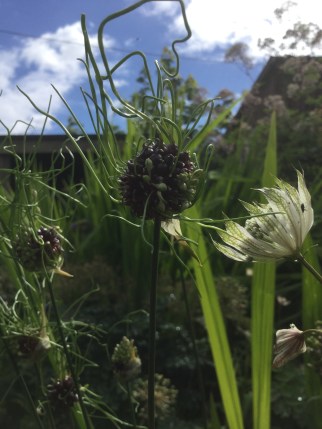
Allium ‘Hair‘ is a most unusual decorative member of the onion family. Many ornamental alliums are grown for their striking rounded umbel of flowers and the almost equally decorative seed heads that follow.

What is unusual about Allium ‘Hair’ is that the decorative effect is created by numerous purply/red miniature bulbs growing on the top of the ‘flower stem’, the wild ‘hair’ effect is created from tiny green shoots that twist and bend to create an overall effect.

IMG_0804These alliums make superb contemporary cut flowers because they last well with no petals to fade, they are also excellent when planted in big groups within planting schemes of ornamental grasses, herbaceous perennials and other bulbs. They are a particularly good contrast with the lovely soft feathery grass Stipa tenuissima ‘Pony Tails’

(Shown here growing with Astrantia major)

Alliums require a sunny spot and a well drained soil, if they are…

View original post 32 more words

carolinewright201's avatargardencraftblog

Gooseberries are not everyones cup of tea but if you grow them yourself or have access to fresh picked gooseberries there are lots of tasty things that you can do in addition to the traditional crumble, they make a perfect chunky sauce to go with mackerell, gooseberry gin liqueur is well worth the wait and gooseberry jelly is a great accompaniment to savory foods as well as making an interesting alternative to marmalade.

If you have plenty of gooseberries then gooseberry and chilli relish is easy to make and is really tasty with cheese and cold meats if you like something tangy and spicy on the side.

The time consuming bit is chopping the gooseberries. For 4 medium jarts of relish I chopped one large punnet (from picture above) Each gooseberry should be sliced in half then each half into two or four depending on its size. Then finely chop…

View original post 184 more words


After several experiments printing onto fabric using plants I decided to have a go at printing onto paper having seen some examples of what can be achieved.

This first attempt was really an experiment into what sort of paper is best and what results are possible from different plants. Having read that a heavy grade of paper is best I dug out some large sheets of blotting paper and an old water colour pad. I soaked these in an alum mordant solution for a few hours before adding the foliage and flowers. I was a bit worried that the paper might disintegrate but although it was a little fragile with careful handling I managed to spread out the sheets, lay out some different plants and fold up the paper to fit into my steaming pan.

The sheets were then steamed for an hour and a half by which time I could see the colours coming through so I let them cool before carefully opening them up, removing the leaves and spreading out in the sun to dry.

The Cotinus  coggygria ‘Royal Purple’ came out well as it does on fabric, the Crocosmia flowers and fennel leaves also created strong impressions and the Geranium leaves gave a sort of watercolour effect.

A fair first attempt but more experimenting needed to get stronger images on the paper, watch this space!


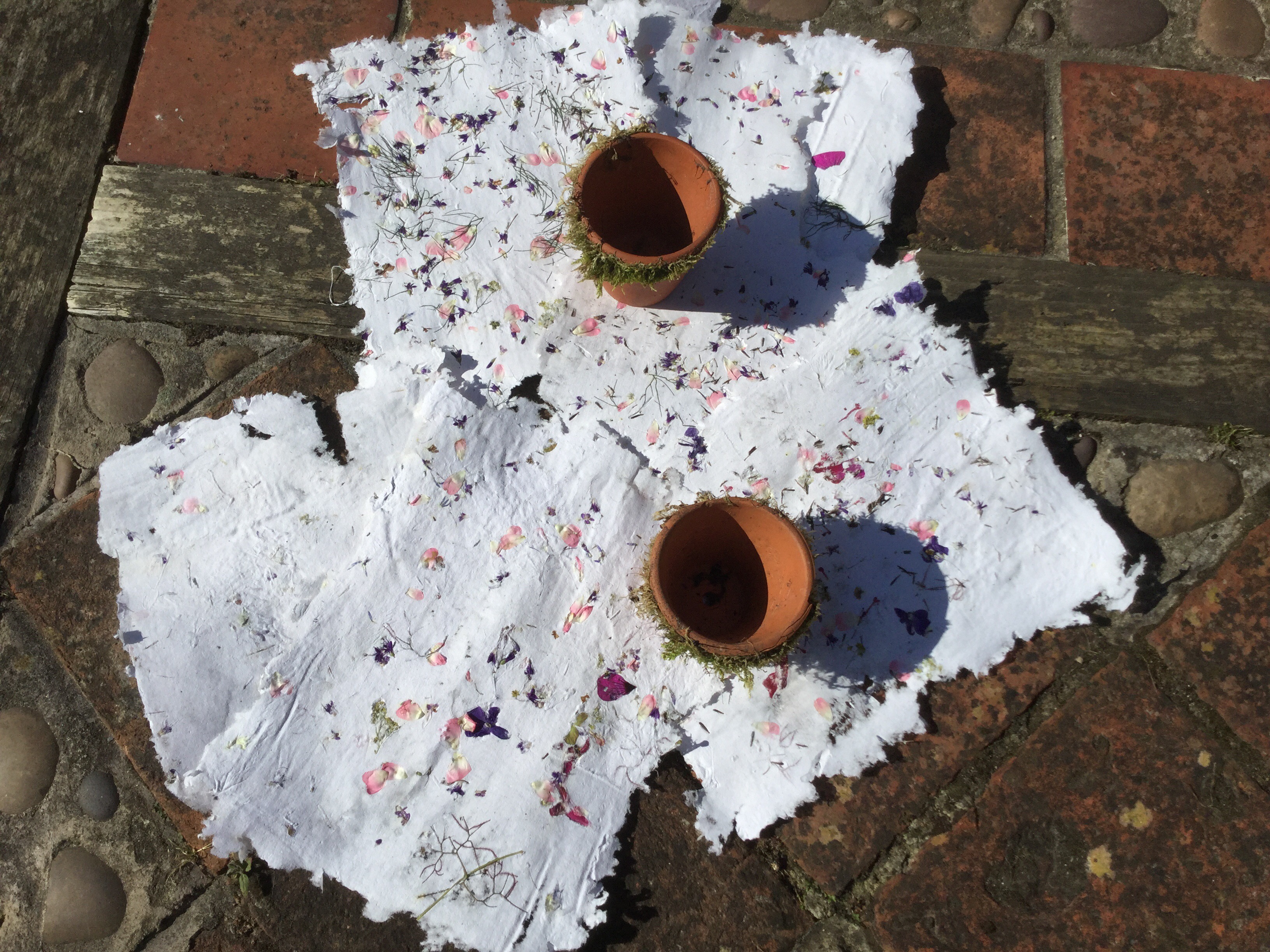
This first experiment in paper making was to try and make interesting hand made paper that could then be made into greetings cards, invites, gift tags or bookmarks. I wanted to embed seeds into the paper so that it could be recycled again with a floral result.

First you take perfectly good paper and rip it into small pieces! Actually it was scrap paper, some old worksheets from lessons that were out of date. You can use old envelopes, newspaper, wrapping paper, brown paper bags etc, but I wanted a fairly clean result so that I could try printing onto it as well so I used ordinary A4 sheets with just a little print on them.

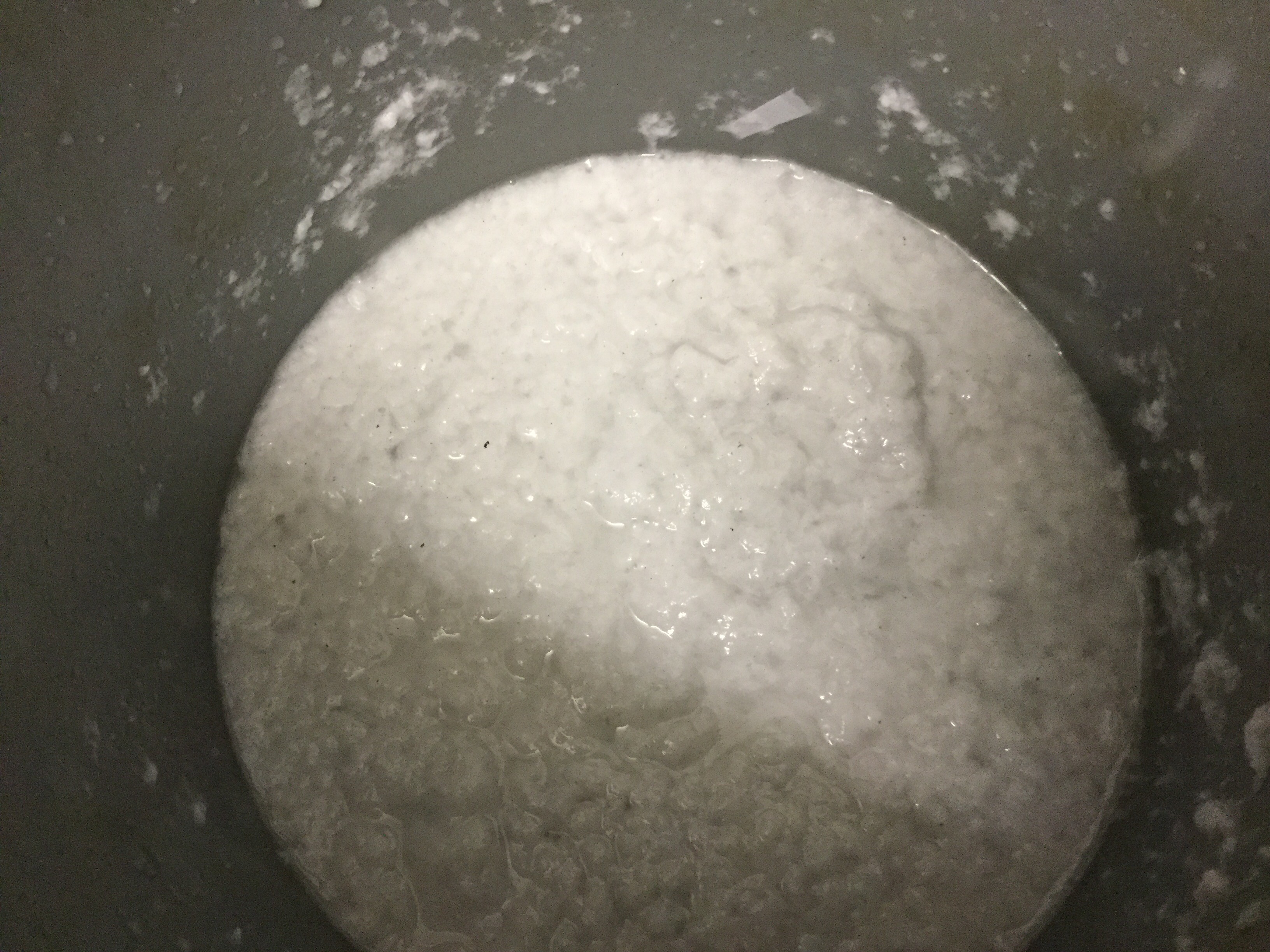
I soaked the torn pieces in hot water for a couple of hours then blended them using a hand blender, the result was a bucket of white mush. 

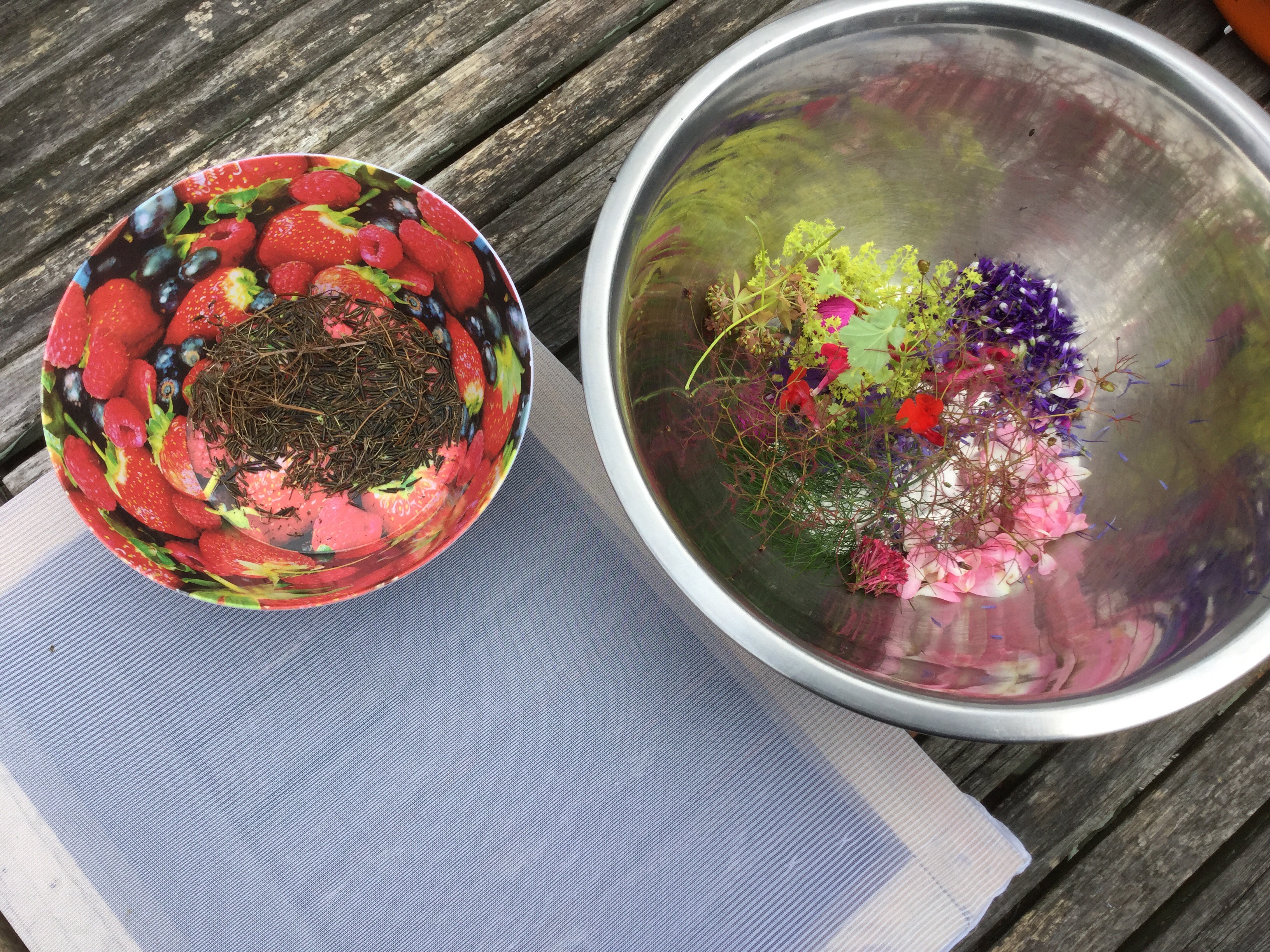
I made a small frame from oddments of wood and stretched an old piece of net curtain over it stapling into place. Then I added more water to the mush and collected flowers, petals and seeds from the garden.

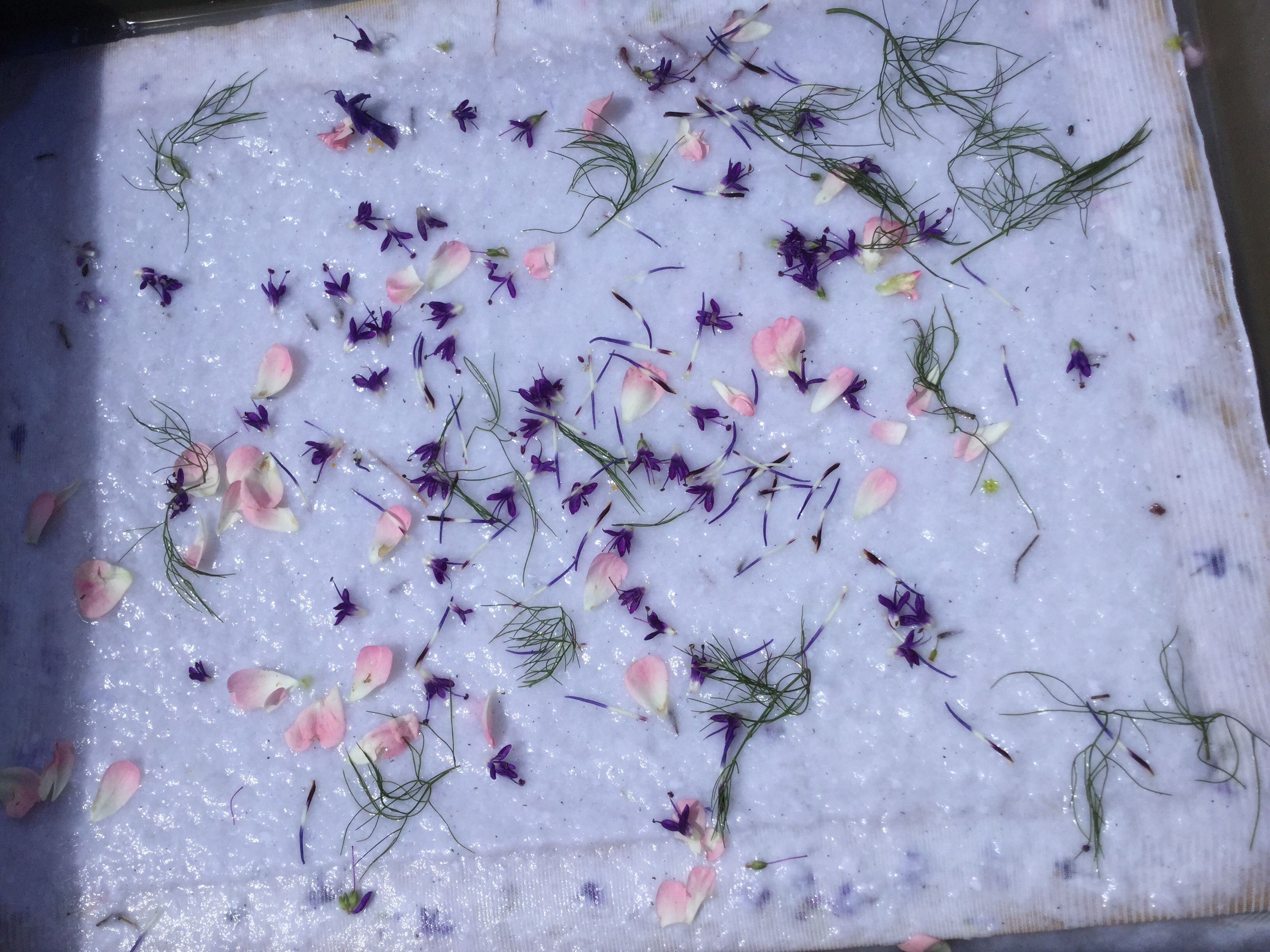
After dipping the screen into the paper pulp mix and adding some flowers and seeds I then turned it over onto a piece of scrap fabric, it was important to sponge the back of the paper through the screen to remove excess water before carefully removing the screen.

The paper was left to dry in the sun for a few hours before carefully removing from the fabric. The results were encouraging, pretty pieces of hand made paper that would make lovely gift cards, greetings cards, invites or just for sending a special message, He best thing is that if you lay it onto compost and water, you will have an extra surprise of seedling Anthriscus sylvestres ‘Ravens Wing’, commonly known as purple cow parsley.

IMG_2249
IMG_2253 Making seed and petal paper


Geranium ‘Splish Splash’ is a cultivar of the native meadow cranesbill Geranium pratense. The delightful splashed mottling of the petal colour is what gives this plant a delicate interest. Like the meadow cranesbill, this cultivar has a fairly loose, open habit and finely divided lobed leaves. Making about 45 cm tall and as the common […]

via Geranium ‘Splish Splash’ — gardencraftblog