Learn the basics of organic gardening starting with the key principles of building soil fertility using natural methods and organic pest and disease control, basic practical techniques and tips on how to be successful and how to avoid key problems.
You will have the opportunity to test your own soil, get answers to your questions and see an organic system in practice as well as learning the basic theory. Plus you will have a choice of free heritage and heirloom bean seeds to take away and grow.
Thursday 10th May 10.00-3.00 40€ including light lunch and refreshments.
Use the button below to book your place on this course. If you have any questions please use the enquiry form at the bottom of the page.
Greenwood crafts: Use a traditional pole lathe to turn a dibber or a string line. 10.00-4.00 either Thursday 8th March or Saturday 10th March. 35 Euros per person including materials and light lunch: Greenwood crafts info and booking Introduction to Tree identification Learn the basics of plant identification and get to know some common trees in winter to enhance your enjoyment of your garden and the surrounding countryside. 17th March 20 €: Tree Identification info and booking Tool maintenance: learn how to service and sharpen your hand tools. 22nd March or 24th March. Bring along your secateurs, loppers, axe, shears etc. 2 hour session 20 €: Tool maintenance info and booking Make a bird box or bird table: be creative and make a quirky bird box or feeder. 12th April 10-2.30 35€ inc materials and light lunch: booking form coming soon
Willow weaving: learn basic weaving skills and weave an ‘acorn’ lamp for your summer garden 14th April 35€: Willow lantern info and booking
Garden design: Learn the principles of garden design, garden surveying and planting plans and create a design for your garden. 2 days 26th April /3 May 80€: Garden Design info and booking Chicken wire sculpture: Create a chicken in wire for a bespoke garden feature. 28th April 10.00-4.00 55€ inc materials and light lunch: Chicken sculpture info and booking
Watch this space for details of forthcoming courses: eco-printing, dye your own silk scarf using plants and natural dyes, organic growing, willow sculpture, Basic botany
Learn the basics of sculpture using chicken wire to create a lifelike chicken sculpture for your garden. A good basic beginners course which can lead onto building on these skills to create more complex sculptures later in the year.
This full day course will run on Saturday 28th April from 10.00-4.00 including a short break for a light lunch and refreshments. Materials and refreshments are all included. 55€ per person.
You will need to wear work clothes and bring a pair of sturdy gloves. Chicken wire is a malleable material and easy to use but will require moderate strength in your hands and fingers.
To book onto the course please use the ‘buy now’ button below. If you have any questions or comments please use the enquiry form below.
Helleborus orientalis is a very variable species that will self-seed readily and will
Floating hellebores
produce a wide range of flower colours and shapes in its offspring, it also hybridises freely and the resulting Helleborus x hybridus are equally variable. You will often see different variants and hybrids offered for sale as unnamed varieties and this is because they are grown from seed and each individual can be distinct from others within a batch of seedling plants, there are far too many attractive variations to name them all. If a particularly attractive seedling is to be named and sold as a cultivar it must be cloned (vegetative propagation such as cuttings and division). This is a lengthy process because it takes several years for a clump to reach a large enough size for dividing and Hellebores dislike disturbance. They do not produce stems with nodes so cuttings are not possible.
Named cultivars are often expensive because of this process but the desire for double flowers, dark purple to black and upward pointing flowers is such that plants that display some or all of these characteristics are sought after and therefore worthy of the process.
Helleborus are typically under story plants and are at their best when planted in natural drifts under trees and shrubs to give an early display of ground cover, they complement early spring bulbs and other winter interest herbaceous perennials such as Arum italicum ‘Marmoratum’ and thrive in humus rich, neutral to alkaline soils in shade or semi shade. They do best in a moisture retentive soil but can cope with dryer soils as long as they are not in full sun.
The leaves are evergreen but leaves from the previous season should be cut off at ground level in mid-winter just before the flower buds start to develop. You will then benefit from a stunning display of flowers that are not hidden by the tatty older leaves, new leaves will start to grow as the flowers fade. Division can take place every 5-8 years in autumn but don’t be afraid to let them self-seed or save some of the developing seeds and cultivate them, sow in autumn but don’t treat them too kindly, they need exposure to cold over the winter in order to break the dormancy and they will then readily germinate in spring.
Hellebores do not make great cut flowers because the stems soon flop and the real beauty of the flowers is mainly hidden on the inside but you can snip off just the flowers and create a stunning floating display as a table centre piece which lasts longer than the cut stems.
Learn basic willow weaving techniques and create a stunning ‘acorn’ lantern for your garden, summer house or home by adding some fairy lights.
This half day course runs from 1.00-5.00 with a short break for refreshments (included)
You will create your own lantern to take home with you (all materials for the willow lantern are included in the cost) Add your own battery powered or solar lights to create a unique and subtle outdoor light.
This is a good beginners piece for anyone who wants to learn willow weaving or willow sculpture. More advanced courses will be running later in the year.
You will need to wear comfortable ‘work’ clothes and bring a pair of light gardening gloves. Willow is a flexible material but moderate strength and dexterity in your hands and wrists are beneficial. We can help you if necessary.
14th April 1.00-5.00pm 35€ per person
Please use the buy now button below for booking onto the course and the enquiry form if you have any questions:
If you have any questions or comments please use the contact form below:
Here at Le Jardin Creatif we have been busy setting up our sister enterprise ‘La Petit Pépinière de la Guinandie. The high rainfall in January has slowed down our progress on getting all of our polytunnels and structures up but we have managed to make a start.
Watch this space for more details about when we will be fully opening the nursery but in the meantime we have lots of potted bulbs ready for sale. Now is the time for planting out bulbs ‘in the green’ for naturalising and for spring displays in pots and borders. If you missed your opportunity to plant bulbs in the autumn we have a wide range for sale. We will be open Saturday morning 10th February 10.00-2.00 or by appointment if you want to drop by on a different day or time.
Learn the principles of garden design on this two day course.
The course covers a brief history of garden design and how this influences modern design principles. You will explore the principles of good design, colour theory and discuss a variety of different styles.
You will then look at how to survey a garden and create a basic scale drawing of your garden. You will go on to add design elements to the plan and learn how to create planting plans.
The course covers all that you need to be able to redesign your own garden and create basic designs and planting plans for friends, family and clients.
The course will run over two full days giving you time to survey your garden and bring along your sketches to the second day.
Both days will include a light lunch. We will supply materials that you need to create your scale drawing for use on the course and can advise on basic equipment required to set yourself up at home.
09.30 – 2.30 on Thursday 26th April and Thursday 3rd May 80€
To book onto the course please use the buy now button below. If you have any questions please use the enquiry form:
Along with the snowdrops there are many trees that wake up early and give us a display of flowers that promise the start of spring. Some of them like the beautiful witch hazel Hamamelis ‘Diane’ are highly scented and fill he air with spicy perfumes to attract any pollinating insects that might also have woken from hibernation early to make the most of a little winter sunshine. These winter flowering plants provide vital pollen and nectar for the overwintering insects that will be getting low on energy by now.
Another shrub with a powerful fragrance is the winter honeysuckle Lonicera x fragrantissima one of the shrubby honeysuckles that bears pairs of fragrant flowers all along its arching stems from January through till April will be covered in bees on a sunny winters day. Spot the pollen sacks on the bee in the photograph taken 24/01/18
Not all trees and shrubs are insect pollinated. Some are wind pollinated and produce separate male and female floral structures. The male flowers are usually catkins, releasing pollen when they mature. At the moment the hazel trees are in full flower, their make catkins having elongated over the last week or so waving away in the hedgerows distributing their pollen in the wind. Harder to spot are the female flowers that look like miniature sea anemones emerging from small plump buds along the stems. Hazel trees need a period of mildly windy weather without too much rain for the pollen to spread effectively and be caught up on the sticky female floral parts. Unfortunately high winds and heavy rain at this time of the year can lead to a bad crop of nuts.
With the weather picking up this weekend in the Limousin why not take the opportunity to go outside and see what nature you can spot in your garden and hedgerows.
We are pleased to announce our selection of courses for February and March 2018.
Start the New year by learning a new skill! These courses will also make a great last minute Christmas present for someone who enjoys the outdoors and being creative.
Check out our website or follow the links below for more information and booking onto courses for early 2018:
Graft your own fruit tree: learn the skill of grafting and have a go at grafting your own apple tree to take home with you. Half day course either Thursday 1st February or Saturday 3rd February. 35 Euros per person (includes light refreshments and materials) see post: Graft your own apple tree
Willow weaving: make a fat ball bird feeder. Half day courses running Thursday 8th February or Saturday 10th February. 25 Euros per person (includes all materials and light refreshments) See post for more details and booking: Willow bird feeders
Chicken wire sculpture: Make your own hedgehog sculpture for the garden. Half day course either Thursday 22nd February or Saturday 24th Feb. 35 Euros per person (including light lunch and all materials). See post for more details and booking: Make a hedgehog out of chicken wire
Fruit tree pruning: learn the skill of pruning your fruit trees for best results, the course will cover the theory and practice of pruning and training young trees as well as renovating and caring for mature trees. Full day course either Thursday 1st March or Saturday 3rd March. 35 Euros per person including light lunch. See post for more details and booking: Introduction to Fruit Pruning
Use a traditional pole lathe
Greenwood crafts: Use a traditional pole lathe to turn a dibber or a string line. 10.00-4.00 either Thursday 8th March or Saturday 10th March. 35 Euros per person including materials and light lunch. See post for more details and booking: Greenwood crafts: Make a dibber using a traditional pole lathe
Care for your tools
Tool maintenance: come along and learn how to service and sharpen your hand tools. half day course either Thursday 22nd March or Saturday 24th March. Bring along your secateurs, loppers, axe, shears etc. 2 hour session 20 Euros per person. See post for more details and booking: See post: Tool maintenance
Winter tree identification: learn the basics of plant identification with an emphasis on identifying common trees in winter. Half day course on 17th March 20 euros per person. See post for more details and booking: See Post: Introduction to tree identification
This 2 hour course is suitable for beginners and covers basic plant identification skills with an emphasis on the identification of common trees. On this course you will cover some basic botany and discover the secrets to identifying plants and deciduous trees during the winter when they have no leaves present. You will be able to put these skills into practice in your own garden and while out enjoying the countryside enabling you to engage with the natural flora of the region.
This taster session is also a good start for coming along to more advanced botany and plant identification sessions during the year. Look out for forthcoming posts with details.
The course will run on 17th March from 1-3pm and costs 20 Euros per person. The first part will focus on theory of plant identification and look at the plant anatomy that can help us to identify plants. The second part will be practical tree identification and you will look at common trees native to the region.
To book onto this course use the buy now button below. We will send you confirmation and further information once we have received your payment.
If you have any questions please use the contact form below:

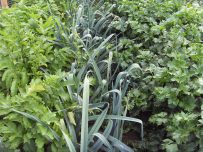 Learn the basics of organic gardening starting with the key principles of building soil fertility using natural methods and organic pest and disease control, basic practical techniques and tips on how to be successful and how to avoid key problems.
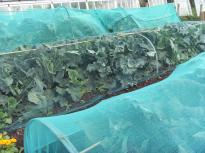 answers to your questions and see an organic system in practice as well as learning the basic theory. Plus you will have a choice of free heritage and heirloom bean seeds to take away and grow.


 Greenwood crafts: Use a traditional pole lathe to turn a dibber or a string line. 10.00-4.00 either Thursday 8th March or Saturday 10th March. 35 Euros per person including materials and light lunch:
 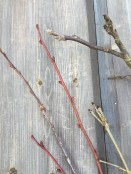 Introduction to Tree identification Learn the basics of plant identification and get to know some common trees in winter to enhance your enjoyment of your garden and the surrounding countryside. 17th March 20 €:
 April 10.00-4.00 55€ inc materials and light lunch: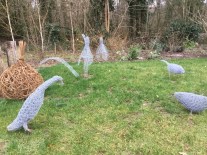
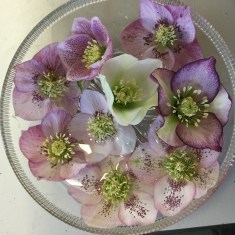
 italicum ‘Marmoratum’ and thrive in humus rich, neutral to alkaline soils in shade or semi shade. They do best in a moisture retentive soil but can cope with dryer soils as long as they are not in full sun.
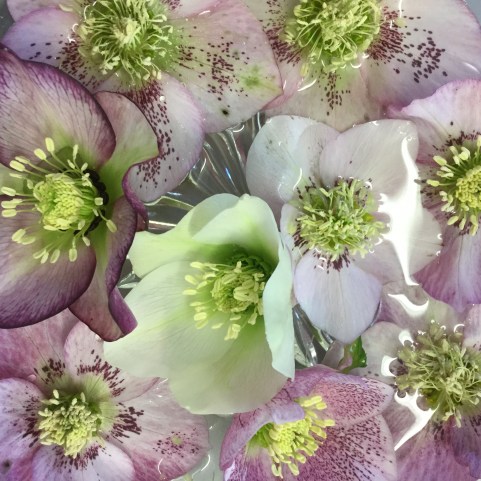 Hellebores do not make great cut flowers because the stems soon flop and the real beauty of the flowers is mainly hidden on the inside but you can snip off just the flowers and create a stunning floating display as a table centre piece which lasts longer than the cut stems.
 You will create your own lantern to take home with you (all materials for the willow lantern are included in the cost) Add your own battery powered or solar lights to create a unique and subtle outdoor light.


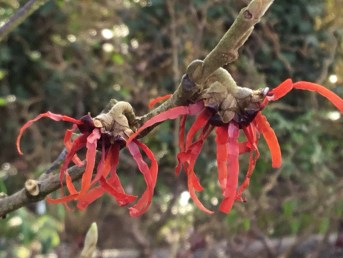 of flowers that promise the start of spring. Some of them like the beautiful witch hazel Hamamelis ‘Diane’ are highly scented and fill he air with spicy perfumes to attract any pollinating insects that might also have woken from hibernation early to make the most of a little winter sunshine. These winter flowering plants provide vital pollen and nectar for the overwintering insects that will be getting low on energy by now.
 Another shrub with a powerful fragrance is the winter honeysuckle Lonicera x fragrantissima one of the shrubby honeysuckles that bears pairs of fragrant flowers all along its arching stems from January through till April will be covered in bees on a sunny winters day. Spot the pollen sacks on the bee in the photograph taken 24/01/18
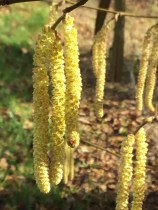 separate male and female floral structures. The male flowers are usually catkins, releasing pollen when they mature. At the moment the hazel trees are in full flower, their make catkins having elongated over the last week or so waving away in the hedgerows distributing their pollen in the wind. Harder to spot are the female flowers that look like miniature sea anemones emerging from small plump buds along the stems. Hazel trees need a period of mildly windy weather without too much rain for the pollen to spread effectively and be caught up on the sticky
 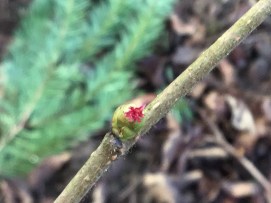 female floral parts. Unfortunately high winds and heavy rain at this time of the year can lead to a bad crop of nuts.
 Graft your own fruit tree: learn the skill of grafting and have a go at grafting your own apple tree to take home with you. Half day course either Thursday 1st February or Saturday 3rd February. 35 Euros per person (includes light refreshments and materials) see post:
  ebruary or Saturday 10th February. 25 Euros per person (includes all materials and light refreshments) See post for more details and booking:
 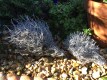 ourse either Thursday 22nd February or Saturday 24th Feb. 35 Euros per person (including light lunch and all materials). See post for more details and booking:
  Fruit tree pruning: learn the skill of pruning your fruit trees for best results, the course will cover the theory and practice of pruning and training young trees as well as renovating and caring for mature trees. Full day course either Thursday 1st March or Saturday 3rd March. 35 Euros per person including light lunch. See post for more details and booking: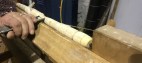

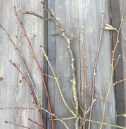 Winter tree identification: learn the basics of plant identification with an emphasis on identifying common trees in winter. Half day course on 17th March 20 euros per person. See post for more details and booking: See Post:
  identification of common trees. On this course you will cover some basic botany and discover the secrets to identifying plants and deciduous trees during the winter when they have no leaves present. You will be able to put these skills into practice in your own garden and while out enjoying the countryside enabling you to engage with the natural flora of the region.
 Le Jardin Creatif