
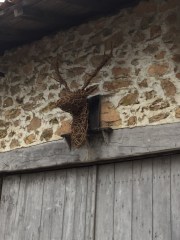
 Come along and learn the art of making animal sculptures out of willow. Make a majestic Stag Head to mount indoors or outside.
You will learn the basics of using willow as a medium for sculpture and create an impressive stag head sculpture over the course of the day.
Tuesday 22nd October 10.00-4.30; a light lunch, refreshments and all materials are included: 65€
Willow is a flexible material that is easy to use for freestyle 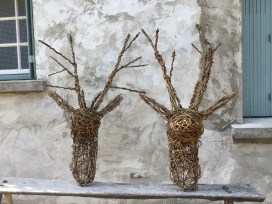 sculpture and you will be able to add your own personal touches to your stags head. You do need a little strength and dexterity to work with willow on a larger sculpture such as the stags head. We will support anyone who needs a little help to finish theirs off on the day.
THERE IS JUST ONE PLACE LEFT ON THIS WORKSHOP PLEASE USE THE CONTACT FORM TO GET IN TOUCH IF YOU WOULD LIKE THE REMAINING PLACE. BOOKINGS WILL HAVE TO CLOSE ON THURSDAY 17TH OCTOBER AT MIDDAY TO ALLOW TIME TO PREPARE THE WILLOW.
Contact form:


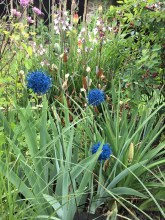 So many of our garden visitors have been stunned by our chicken wire Alliums that we have decided to pot on some workshops so that you can come and make them.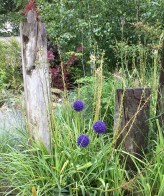

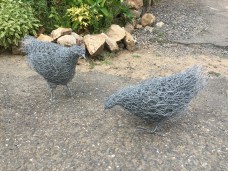 Learn the basics of sculpture using chicken wire to create a lifelike chicken sculpture for your garden. A good basic beginners course which can lead onto building on these skills to create more complex sculptures later in the year.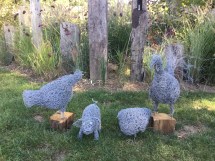
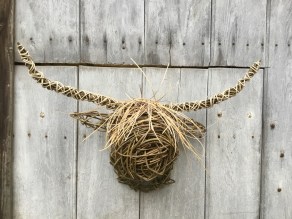 Come and learn how to use willow as a medium for sculpture and make this wall mounted sculpture of a Highland Cows head.
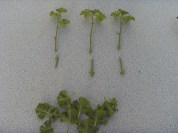 This basic course in plant propagation will look at the basics of propagating from seed and from semi-ripe and hardwood cuttings. You will learn a little botany that will help you to be more successful in rooting cuttings and understanding the different types of seeds, seed saving tips and overcoming different types of dormancy in seeds.
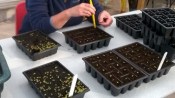 This half day introductory course is running on Thursday 31st October 1-4pm: 25€ per person. All materials and light refreshments are provided and You will be able to take home your cuttings.
 Amelanchier canadensis is native to Canada (as the specific epithet suggests), and in its native environment is prized for its berries that mature in June and are packed with vitamins and have been termed as one of the ‘super foods’. Perfectly hardy and tolerant of the hot dry summers here it is a super choice as a large shrub or small tree for your garden. The fruits are similar in size and taste to a blueberry and can be used as a substitute for blueberries in fruit salads, cakes, sprinkled on your breakfast, if you get a bumper crop you can make jams and jellies and even June berry Gin – use the same quantities and method as for making sloe gin.


