Now is the time to help some of your vegetable crops with pollination.
Quite a lot of veg crops are self fertile because they possess flowers that contain both male and female reproductive structures (stamen and pistil- which consists of the style and the stigma) and are capable of transferring pollen from the stamen to the pistil within the same flower. Most peas and beans are self fertile and the fruits set easily.

Some plants have evolved complicated mechanisms to avoid self pollination and therefore improve genetic diversity. Two common vegetable plants that can be described botanically as ‘monoecious’ display this principle. A monoecious plant will possess separate male and female flowers, this helps to avoid self pollination. Courgettes, cucumbers and squash are all monoecious and it is easy to spot the female flowers as they are the ones attached to the ovary (the young courgette, cucumber or squash), the male flowers are simply attached to a stalk, they are only open for one day and rely on insect pollination but if the weather is very wet or windy this may not happen. You can help out by picking off a male flower, peeing back the petals to reveal the stamen in the centre and rubbing some of the pollen off onto the stigma in the centre of the female flower. This should improve fruit set (the fruit

will wither and drop off if pollination doesn’t take place).
Sweetcorn are also monoecious, but these plants are wind pollinated and this is why it is recommended that you plat them in blocks rather than rows so that pollen is more likely to be blown onto a nearby female ‘flower’. Again, the females are easy to spot as they grow out of the top of the young corn cob, they resemble lots of hairy green blades of grass sticking out – these are the stigma – each one needs to encounter a pollen grain if the little yellow corn kernel is to develop. Poor pollination is common in sweetcorn and the reason for the cobs not developing properly. If wind is too strong, or non existant then pollination can be very poor. When the male flowers open up on your plants and the green stigma are visible go and give each plant a little shake – you should be able to see the pollen falling down onto the female flowers.


These methods should give you a better crop of each.
If you have plenty of male courgette flowers – why not try stuffed courgette flower fritters – take fresh male flowers in the morning and keep then chilled. Stuff with a mix of rice, herbs and spices, sautéed onions, mushrooms, chunks of feta cheese, pine nuts.. in fact anything that you fancy…. dip into tempura batter and fry. YUM, serve with a salsa or tzatziki dip.


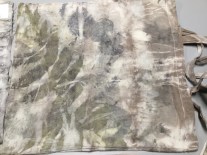 Come along and have a go at eco-printing techniques. You will experiment with leaves, flowers and rust combined with plant based dyes on cotton and paper samplers. You can bring your own T shirt or household lined to work on too. You will go home with some unique prints and an understanding of the materials and processes involved so that you can go away and experiment at home.
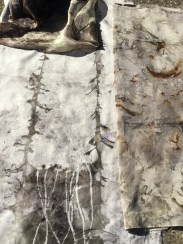 THIS COURSE IS NOW FULLY BOOKED if you are interested in doing this course on a different date please use the enquiry form below to request an extra date

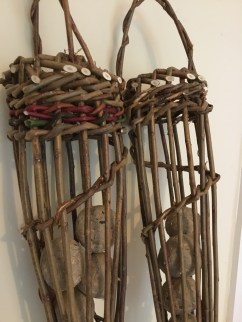 This half day course will teach you some basic weaving techniques through the creation of a hanging fatball bird feeder. These make great gifts and are an attractive garden feature.
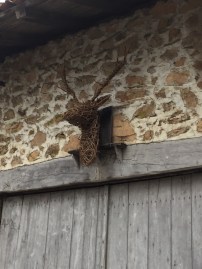 Come along and learn the art of making animal sculptures out of willow. Make a majestic stag’s head to take home.
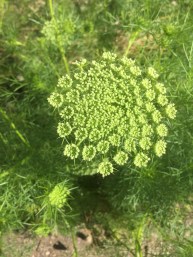
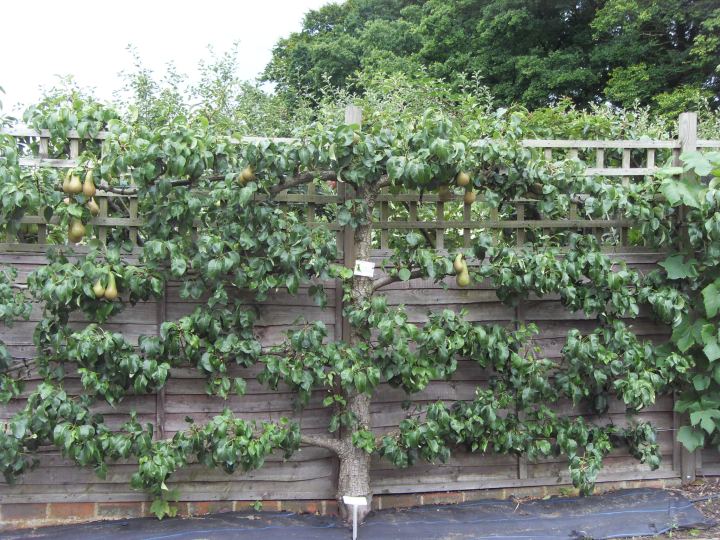
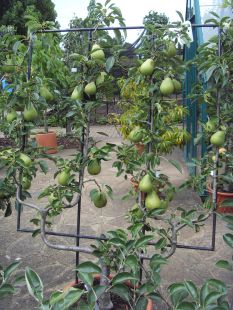 If you are growing cordon, espalier, fan trained or other ‘restricted’ forms of fruit trees on dwarfing rootstocks, now is the time for summer pruning. In France we can start this process a little earlier than in England which is usually late July. The ideal time is when the lateral shoots that have grown all along the main stems are roughly as thick and as long as a pencil.

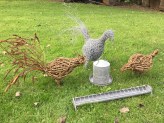 If you enjoy this beginners course we will be offering intermediate courses later this year to make chicken, cockerel or duck sculptures for the garden.
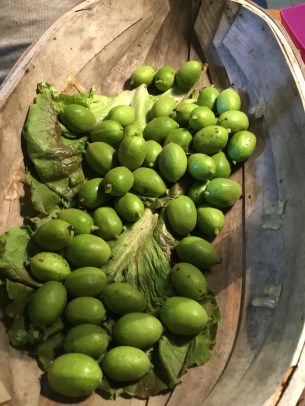 Walnuts are pickled whole in their outer husk before the inner shell starts to harden. They should be picked before they reach full maturity and should be around the size of a quails egg or slightly larger, this is usually around mid-June, to determine the best time for pickling you need to pick one off the tree and cut it in half, if the shell is still soft and they are a reasonable size then they are ready for pickling. You dont need many to fill a jar, maybe around 10 to a dozen per jar. There are plenty on the trees this year so you won’t miss them at harvest time.