
Fed up with using blunt tools? Want to learn how to service your hand tools and keep them in good working order? Take the opportunity to learn tool sharpening and servicing techniques for a range of hand tools on this two hour workshop.
Get ready for the new growing season!
Bring along your blunt secateurs, your rusty shears, damaged loppers etc. to learn some top tips in caring for your tools and give them a little tlc to get them back into good working order to make pruning and chopping easier and to make your tools last longer.
1.00pm-3.00pm on either Thursday 22nd March or Saturday 24th March. 20 Euros per person. We will send you confirmation and further information once we have received your payment.
To book onto Thursday 22nd March use the buy now button below:

To book onto Saturday 24th March use the buy now button below
Send us a message using the enquiry form below if you have any questions or any tools that you would like to bring that you are unsure if we will over on this course.


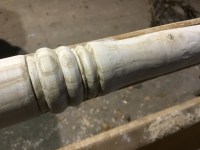 Have a go at woodturning using traditional tools for greenwood crafting. You will create a ‘blank’ from a log section and turn it down into a garden dibber or sting line.
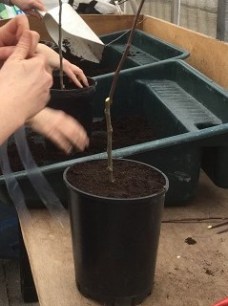 grafting your own fruit tree. We will provide you with a dwarfing rootstock and an apple variety to graft but if you have your own tree that you would like to propagate then please bring some along, use the contact form below to contact us to find out how to harvest grafting material from your tree.
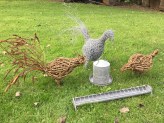 If you enjoy this beginners course we will be offering intermediate courses later this spring to make chicken, cockerel or duck sculptures for the garden.
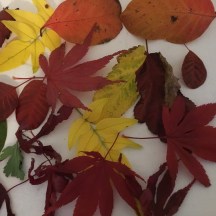 Have you ever wondered why the leaves on deciduous trees change colour in the autumn?
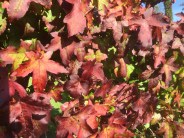 Chlorophyll reacts to certain wavelengths of light but these are limited, to make the most of the light spectrum plants also use other pigments similar to carotene that can react with a wider range of the spectrum. These colours are hidden by the intensity of the green chlorophyll in plants with green leaves. However, once the days start to shorten and the temperatures drop this triggers a process called abscission, in simple terms ‘leaf fall’. Plants need to be thrifty though, the main elements that make up chlorophyll are iron and magnesium but these can be in short supply within the soil when the trees come into leaf in the spring so the trees carefully extract these elements, drawing them back into the tree to store away ready for the first flush of growth in the spring. This is when the other pigments are revealed giving us the fantastic display of autumn colours.
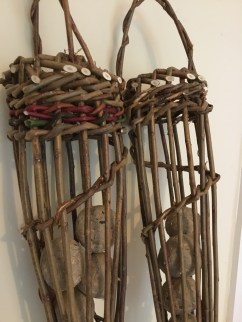 This half day course will teach you some basic weaving techniques through the creation of a hanging fatball bird feeder. These make great gifts and are an attractive garden feature.

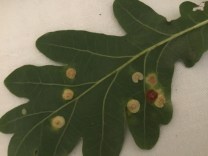 Oaks support many gall forming insects including the common ‘Oak Apple’ which is caused by another species of wasp. The smaller ‘spangle galls’ can be seen on the underside of the leaves are created by a tiny gall wasp larvae which falls to the ground within the gal in the autumn and continues to complete its lifecycle within the leaf litter on the ground.
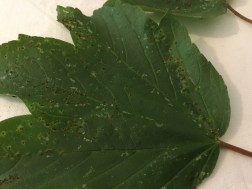 Sycamores also support a range of insect species including the spiky red ‘nail gall’ and many tiny species of gall mite.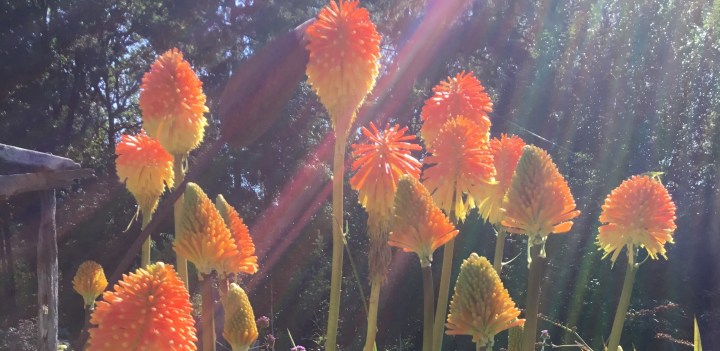
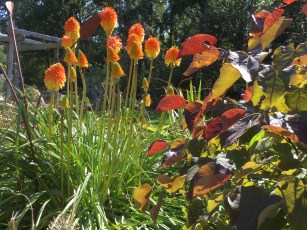 This stunning herbaceous perennials is a close relative of the well known ‘Red Hot Poker’ but this species flowers much later, in England it would normally flower from July into August but here in France it reliably flowers twice each year once in June/July and again during October. This particular plant has only been established for 3 years and had over 15 flower spikes on it in June, now in early October it is starting to produced a second flush of flowers with many more buds to come.
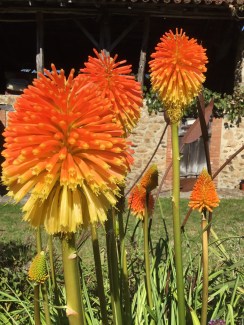 eutral to acid loam or sandy soil and makes a fantastic plant for late summer/early autumn colour in a large herbaceous border.
 Le Jardin Creatif